


Understanding Crimping Accuracy of Fully Automatic Terminal Crimping Machines


If you are in the wire harness business, you have probably asked: “How precise can a fully automatic terminal crimping machine actually be?”
The answer is not a single number. In the industry, two key accuracy indicators matter most: crimping height accuracy and wire processing length accuracy. Below you will find the practical, real‑world values that reliable manufacturers use – no marketing exaggeration.
Core Indicator: Crimping Height Accuracy
Crimping height is the most critical parameter because it directly determines pull force, electrical continuity, and long‑term reliability of the crimped connection.
Standard high‑performance fully automatic terminal machine:
±0.02 mm
High‑end precision machine (automotive wire harness grade):
±0.01 mm
To put that in perspective: 0.01 mm is one tenth of the thickness of a human hair. Achieving this level requires not only a well‑built machine but also high‑quality dies and stable material feeding.
Why does this matter?
A deviation of just 0.03 mm in crimp height can cause a 20–30% drop in pull force, leading to field failures or failed quality audits.
Wire Processing Accuracy (Cutting & Stripping)
Apart from crimp height, the machine must also cut and strip wires precisely. These dimensions affect how the wire sits inside the terminal and connector.
Cutting length accuracy:
±0.1 mm
Stripping length accuracy:
±0.05 – 0.1 mm
For most electronic wire (AWG16–AWG24), ±0.1 mm is perfectly acceptable. For ultra‑fine wires (AWG28–32) used in medical or mobile device cables, you may need to work closer to the ±0.05 mm end of the range.
What Actually Affects Crimping Accuracy? (Four Critical Factors)
You can have a high‑spec machine on paper, but real‑world accuracy depends on four key factors. Ignore any of them and your actual production accuracy will drop.
1. Servo Motor Configuration – The Backbone of Precision
Machines equipped with full servo motors on all axes (wire feeding, stripping, crimping) deliver far superior accuracy compared to pneumatic or basic stepper‑motor machines.
Full servo: Maintains position control throughout the cycle, compensating for wire diameter variations.
Pneumatic: Pressure drops and air compressibility introduce inconsistency – avoid for automotive or medical work.
Our recommendation: Always choose a full‑servo machine if you need ±0.02 mm or better crimp height accuracy.
2. Die Quality – Precision Starts Here
Even the best machine cannot overcome a poor die.
Standard dies: ±0.03 mm typical.
Precision ground dies (imported or locally precision‑machined): ±0.01 mm achievable.
High‑end manufacturers use carbide dies with mirror‑finished crimp pockets and exacting tolerances. For automotive or new energy cables, invest in precision dies.
3. Crimp Force Monitoring (CFM) – Maintaining Consistency
A machine with crimp force monitoring (also called terminal pressure management system) continuously measures the force curve during each crimp. If the force deviates (due to wire strand variation or terminal strip issues), the system alerts the operator or stops the machine.
This does not directly change the mechanical accuracy, but it keeps the process within the specified tolerance by rejecting bad crimps in real time. For high‑volume production, CFM is essential to maintain ±0.01 mm effective accuracy.
4. Wire Gauge and Material – Real‑World Limits
Fine wires (AWG28–32) are more challenging than thick wires.
Thick wire (AWG16–AWG22): More stable, easier to hold tight tolerances.
Fine wire (AWG28–AWG32): Strands are delicate. Stripping and crimping forces can cause slight deformation, so the achievable crimp height tolerance is often closer to ±0.02 mm even on a high‑end machine.
Additionally, wire insulation materials (PVC, silicone, Teflon) affect stripping accuracy. Harder insulations like Teflon allow cleaner cuts, while soft silicone may compress and lead to slightly larger length variation.
Practical Summary: What Accuracy Should You Specify?
Your Application | Recommended Crimp Height Accuracy | Recommended Machine Type |
|---|---|---|
Household appliance wiring, toys, general electronics | ±0.02 mm | Standard full‑servo double‑end terminal machine |
Automotive wire harnesses (non‑safety critical) | ±0.02 mm | Full‑servo + precision dies |
Automotive safety systems (airbag, ABS), medical devices | ±0.01 mm | High‑end servo + CFM + precision ground dies |
New energy / high‑voltage cables | ±0.02 mm (larger terminals may allow ±0.03 mm) | Heavy‑duty servo hydraulic crimper |
For cutting length, ±0.1 mm is sufficient for 95% of applications. Only ultra‑precision work (e.g., high‑frequency coaxial cable assemblies) may require ±0.05 mm.
How to Verify Accuracy Before Buying
Do not trust spec sheets alone. Follow this quick verification process:
Ask for sample crimps on your actual wire and terminal.
Measure crimp height using a micrometer or optical crimp height gauge. Take at least 10 consecutive samples.
Perform pull tests – the pull force should be within the terminal manufacturer’s specified range.
Check cut and strip lengths under a magnifier or ruler.
A reliable supplier (like Dongguan Juchang Machinery Co., Ltd.) will happily run these tests for you and provide measurement reports.
Final Takeaway
Standard high‑quality fully automatic terminal machine: Crimp height accuracy ±0.02 mm, cut length ±0.1 mm, strip length ±0.05–0.1 mm.
Premium automotive / new energy grade: Crimp height accuracy ±0.01 mm when equipped with full servos, precision dies, and CFM.
Remember: Accuracy is a system result – machine + dies + wire + maintenance all play a role.
Ready to upgrade to a terminal crimper that meets your exact accuracy requirements? Contact us today for a consultation or a free sample crimping test.
Related Blogs
-
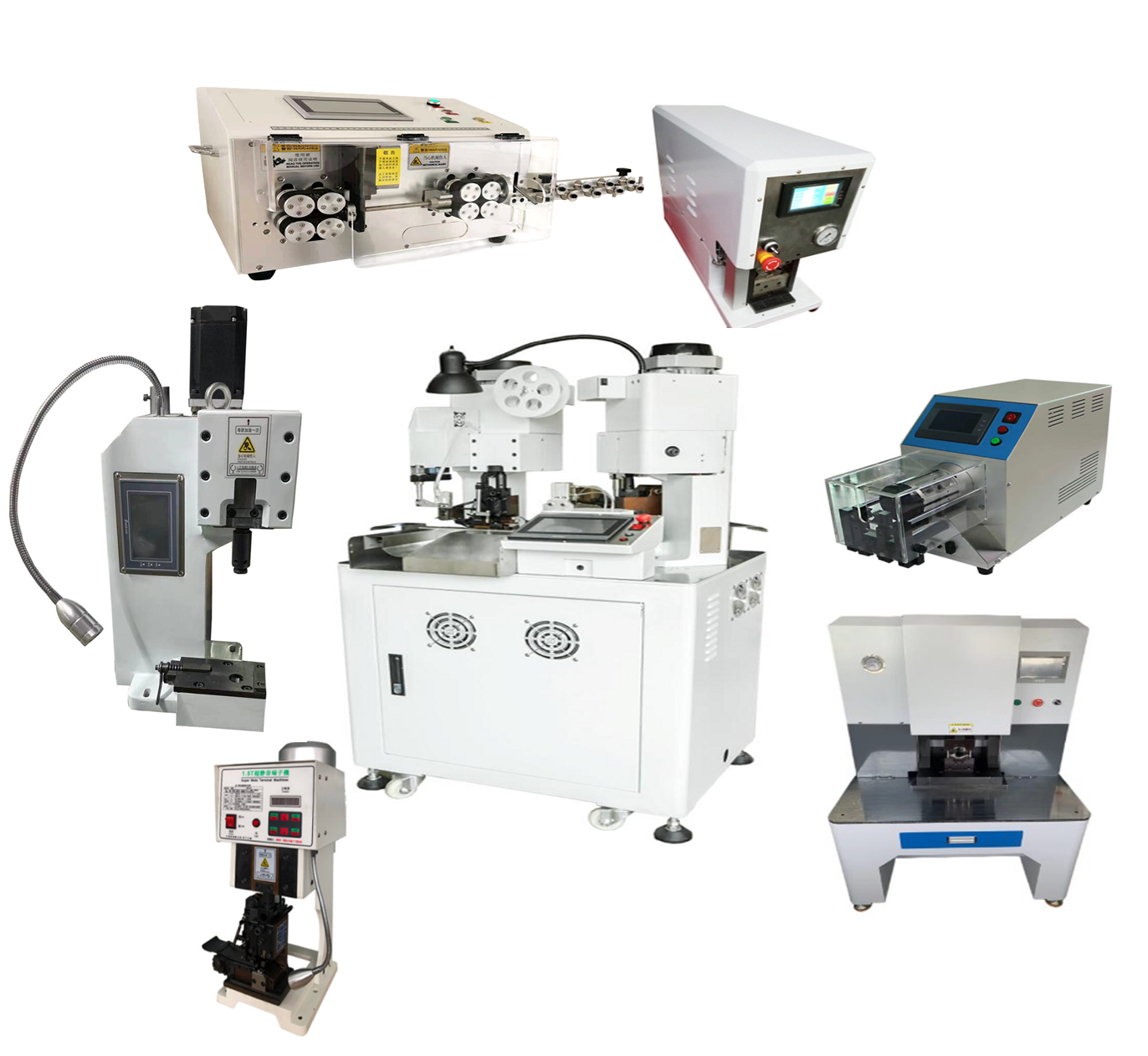 Wire harness processing equipment is a collective term for machinery used in the production of wire harnesses. It is widely utilized across various industries in my country—including electronics, electric motors, and electrical appliances—for the processing of wire harnesses. The application of this equipment has significantly boosted production efficiency and product quality within the wire harness sector, while simultaneously reducing labor and material costs; consequently, it has become an indispensable "essential tool" for modern wire harness manufacturers.
 -
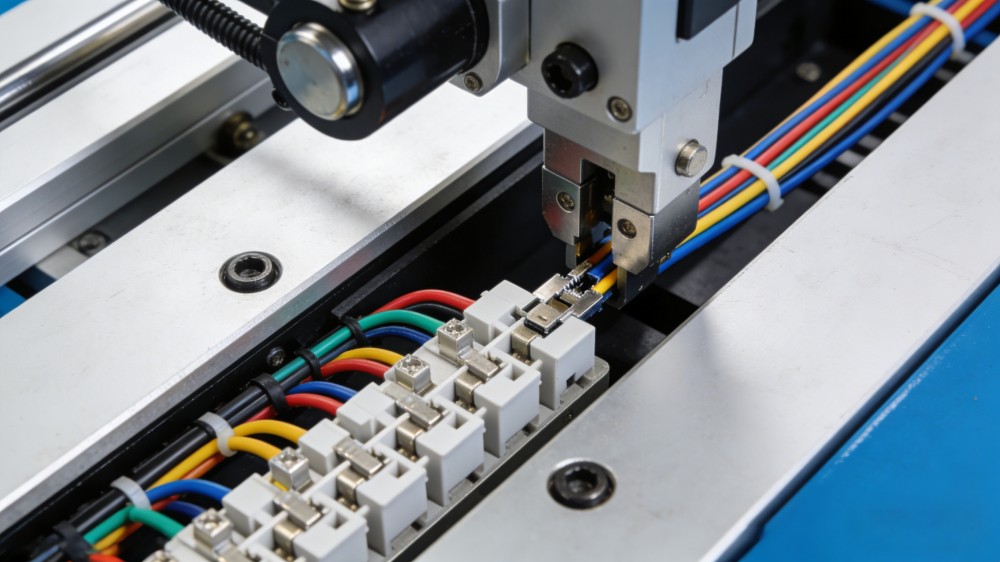 The new energy vehicle (EV) industry is advancing at lightning speed. Every technological improvement, no matter how small, can push the entire sector forward. Behind the scenes, one machine is quietly revolutionizing the production of automotive wire harnesses: the fully automatic insertion termina
 -
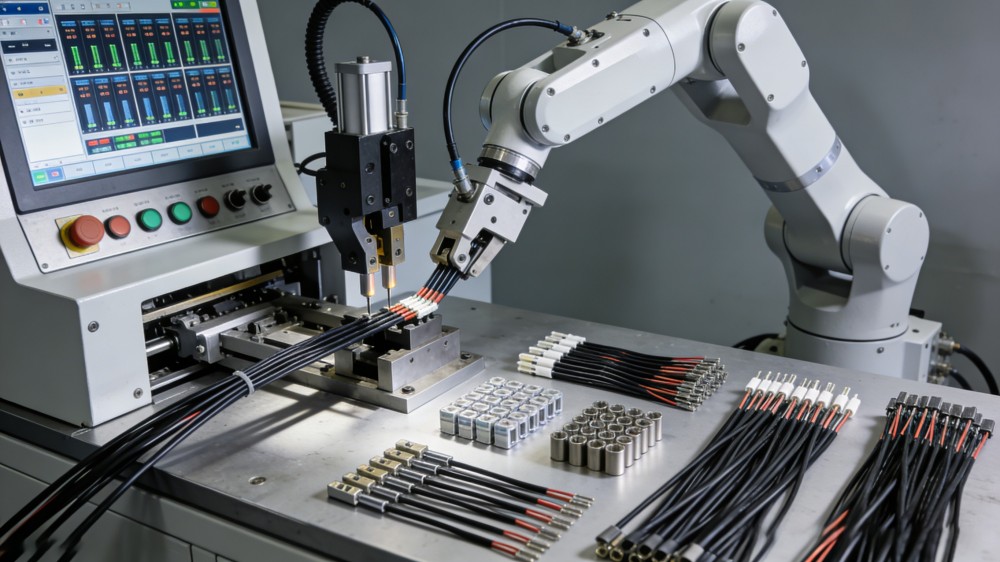 In modern households, the washing machine is an indispensable appliance. It saves us hours of manual labor and makes laundry effortless. But behind the sleek panels and digital displays lies a critical component that often goes unnoticed – the wiring system. And at the heart of producing that wiring
