


The Unsung Hero Behind Every Electric Vehicle


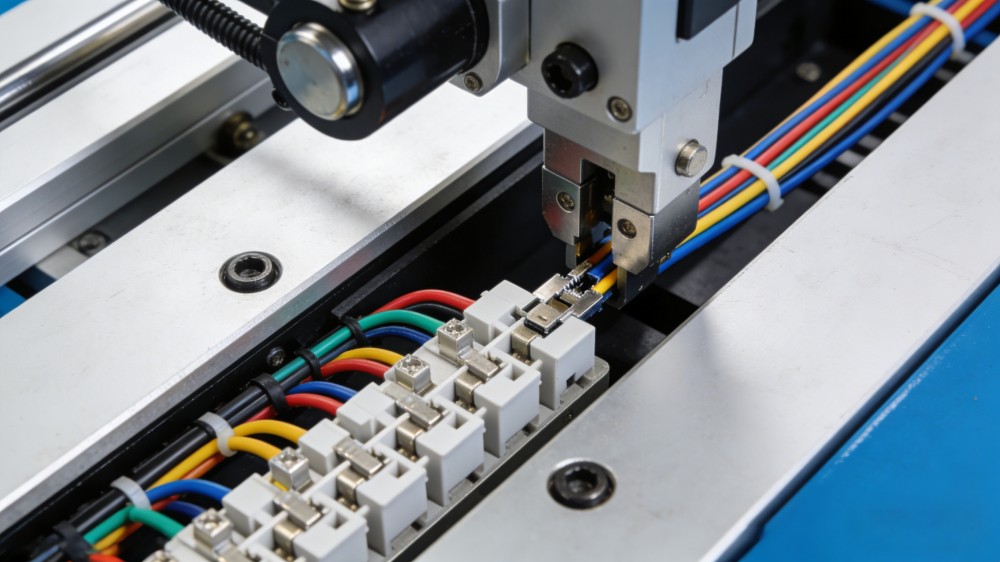
The new energy vehicle (EV) industry is advancing at lightning speed. Every technological improvement, no matter how small, can push the entire sector forward. Behind the scenes, one machine is quietly revolutionizing the production of automotive wire harnesses: the fully automatic insertion terminal machine (also known as the auto housing insertion terminal crimper).
In an electric vehicle, the wire harness acts as the nervous system – transmitting signals and power to every critical component. In traditional manufacturing, inserting terminals into housings was largely manual: slow, inconsistent, and prone to errors. The automatic insertion terminal machine has completely changed that reality.
Precision: Accuracy That Ensures Reliable Connections
Sub‑millimeter Positioning for Perfect Terminal Placement
New energy wire harnesses demand extremely high accuracy. A loose or misaligned terminal can cause intermittent signals, voltage drops, or even system failures. The fully automatic insertion terminal machine delivers exceptional precision:
It inserts each terminal into the correct cavity of the housing with positioning accuracy within 0.01–0.02 mm.
Insertion angle and depth are perfectly controlled, just like a master craftsman shaping every detail.
Eliminating Common Defects
Manual insertion often leads to:
Bent or damaged terminals
Partial insertion (terminal not fully seated)
Mis‑insertion (wrong cavity or orientation)
An automatic machine eliminates these issues. Every terminal is inserted straight, fully seated, and correctly oriented. This directly prevents signal interruption or energy loss, providing a solid foundation for the stability and safety of new energy vehicle systems.
Efficiency: Feeding the Fast‑Growing EV Market
Continuous, High‑Speed Operation
The demand for new energy vehicles is exploding. In 2024 alone, global EV sales surpassed 17 million units, and each vehicle contains hundreds of terminals that need to be inserted into connectors. Manual insertion cannot keep up.
The fully automatic insertion terminal machine operates continuously at high speed – often 2,000 to 4,000 insertions per hour depending on the model. It works tirelessly, completing in minutes what would take a worker hours.
Shortening Production Cycles
For a wire harness manufacturer supplying EV battery packs, motor controllers, or onboard chargers, production cycle time is critical. Automatic insertion machines reduce lead times dramatically. A harness that once took three days to complete manually can now be finished in a single shift. This rapid throughput ensures that wire harness supply can meet the soaring market demand, accelerating the entire new energy vehicle industry.
Automation & Intelligence: Reducing Labor While Increasing Control
Automatic Recognition and Parameter Adjustment
One of the standout features of modern fully automatic insertion terminal machines is their intelligence. They can:
Automatically recognize terminal and housing types via sensors or barcode reading.
Adjust insertion force, speed, and depth based on the specific model.
Switch between different terminal and housing combinations without manual re‑tooling.
This means the operator does not need to constantly intervene. The machine handles dozens of different harness configurations with ease – from tiny signal terminals for sensors to larger power terminals for battery cables.
Real‑Time Monitoring and Fault Alerts
When an abnormality occurs – such as a missing terminal, a jammed housing, or an incorrect insertion force – the machine immediately:
Stops the current cycle
Sounds an alarm or lights an indicator
Displays the fault location on a touch screen
This quick feedback allows operators to locate and resolve issues in seconds, minimizing downtime. The result is lower labor cost, higher process stability, and better overall equipment effectiveness (OEE).
Long‑Term Impact: A Strategic Enabler for the EV Industry
The significance of the fully automatic insertion terminal machine goes far beyond a single production step. It brings three enduring benefits to the new energy wire harness industry:
1. Improved Product Quality
Consistent, repeatable insertion quality means every harness leaving the factory meets the same high standard. For EV manufacturers, this translates to fewer field failures, lower warranty claims, and greater brand trust. Reliable connections are non‑negotiable in electric vehicles, where a wiring fault could disable the battery management system or the drive motor.
2. Higher Production Efficiency and Scalability
As EV production scales from thousands to millions of units per year, manual insertion becomes impossible. Automatic machines provide the scalability needed. Harness makers can increase output without linearly increasing headcount. This efficiency also helps control costs, making EVs more affordable for consumers.
3. Alignment with Industry 4.0 and Smart Manufacturing
Modern automatic insertion machines are equipped with data interfaces (Ethernet, RS232, etc.) that allow them to connect to factory MES systems. They can log every insertion cycle, track crimp force curves, and generate traceability reports. This is exactly what automotive OEMs require for PPAP (Production Part Approval Process) and IATF 16949 compliance. The machine is not just a tool – it is a data node in a smart factory.
The Driving Force for a Greener Future
In the surging wave of new energy vehicles, the fully automatic insertion terminal machine is an indispensable force. It injects new momentum into wire harness production by:
Ensuring precision for reliable EV systems
Boosting efficiency to meet massive market demand
Automating processes to reduce errors and labor
Providing intelligence for traceability and quality control
Without this machine, the EV revolution would face a serious bottleneck. With it, the industry races forward – toward safer, more efficient, and more sustainable mobility.
Ready to Upgrade Your EV Wire Harness Production?
If you manufacture wire harnesses for electric vehicles, battery packs, charging piles, or automotive connectors, investing in a fully automatic insertion terminal machine is no longer optional – it is a competitive necessity.
Dongguan Juchang Machinery Co., Ltd. offers a range of advanced solutions, including:
Fully automatic double‑end terminal crimping with housing insertion
Servo‑driven insertion machines for precision automotive applications
Integrated systems with crimp force monitoring and data logging
Customized models for new energy high‑voltage cables
Contact us today to discuss your EV wire harness production needs. Let us help you drive quality and efficiency to the next level.
Related Blogs
-
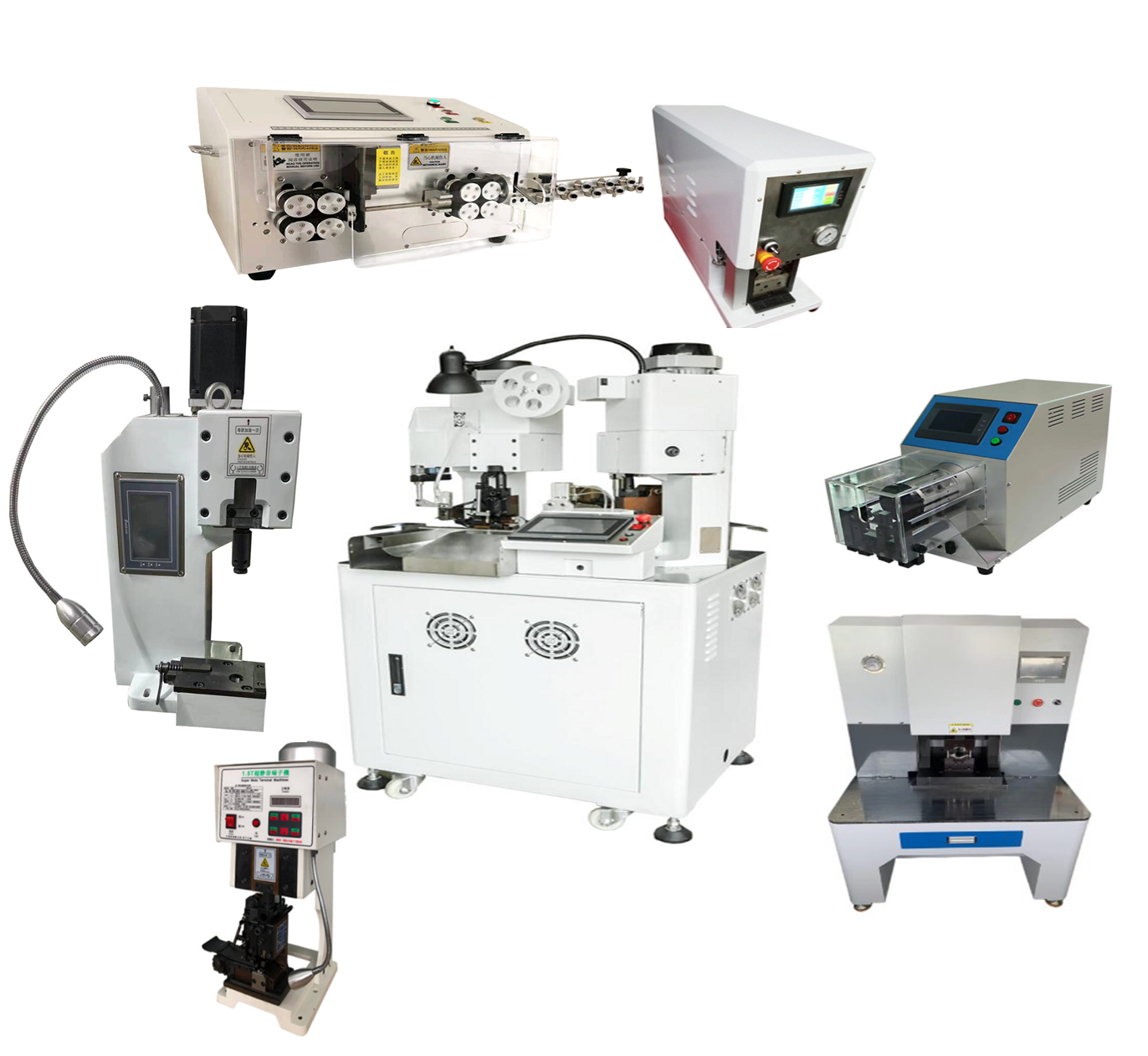 Wire harness processing equipment is a collective term for machinery used in the production of wire harnesses. It is widely utilized across various industries in my country—including electronics, electric motors, and electrical appliances—for the processing of wire harnesses. The application of this equipment has significantly boosted production efficiency and product quality within the wire harness sector, while simultaneously reducing labor and material costs; consequently, it has become an indispensable "essential tool" for modern wire harness manufacturers.
 -
 The new energy vehicle (EV) industry is advancing at lightning speed. Every technological improvement, no matter how small, can push the entire sector forward. Behind the scenes, one machine is quietly revolutionizing the production of automotive wire harnesses: the fully automatic insertion termina
 -
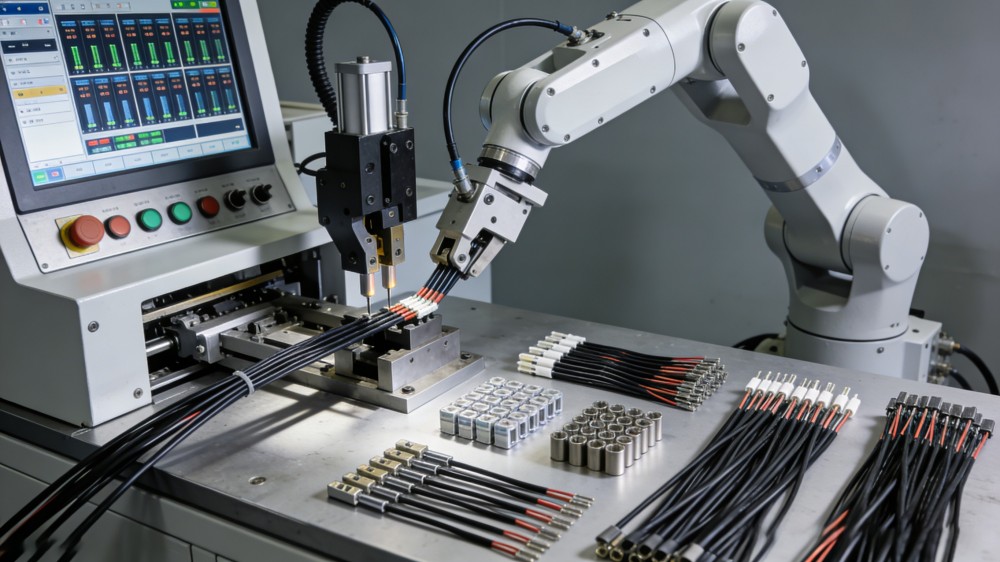 In modern households, the washing machine is an indispensable appliance. It saves us hours of manual labor and makes laundry effortless. But behind the sleek panels and digital displays lies a critical component that often goes unnoticed – the wiring system. And at the heart of producing that wiring
